NASA plans to unveil the first images from the Nancy Grace Roman Space Telescope on 7 December 2026. The agency’s 17 November advisory says the public livestream will begin at 12:30 p.m. Pacific time from the American Geophysical Union meeting in San Francisco. In India, that puts the live unveiling at 2 a.m. IST on Tuesday, 8 December. The difference in dates matters if you plan to watch live or share the event with a school astronomy group.
Roman launched on 30 August 2026 from Florida, according to the mission timeline. The first images will give the public a chance to see what the observatory can capture after launch. NASA identifies dark energy, dark matter and planets beyond the solar system among the mission’s research interests. The advisory gives the date and the event setting. For details such as which targets the images show, look for the captions NASA releases alongside the pictures.
What to read when an image appears
Start with the caption. It should identify what the picture shows and say whether you are looking at the full field or a close-up. This distinction can change the way you read an image. A detail may fill half of a phone screen even though it takes up a very small part of the original frame. If NASA provides both versions, open the wide view first and then locate the cropped feature inside it.
Look for labels that explain how the colours were assigned. Roman observes in infrared, which human eyes cannot see. A published colour image can use visible colours to help readers distinguish measurements made at different wavelengths. The notes accompanying the image can tell you how those colours were mapped. A bright patch might be worth examining for its shape or position before guessing what it is.
Why scientists want to cover a larger patch of sky
NASA’s mission overview describes Roman as having a field of view at least 100 times larger than Hubble’s. Field of view describes how much sky an instrument can cover at once. Think of a photographer trying to document a neighbourhood. A photograph of one house can reveal its windows and roof. A view of the whole street puts that house in relation to the buildings around it. In astronomy, that wider coverage can allow researchers to collect observations of many objects under a shared survey plan.
That matters when the question is about a population of objects. A particularly striking galaxy might make a good photograph. A survey that maps many galaxies can help researchers study how those objects are distributed and how that distribution changes with distance. The science takes place over repeated observations and analysis. The first images can help people see the kind of material researchers will eventually work with.
How to follow the release from India
Use the viewing links on NASA’s advisory and check the page again before the announced time. If the early hour makes a live viewing impractical, look for the agency’s image releases and recording after the event. Reading the captions alongside the pictures will give you more context than a set of screenshots posted during the livestream.
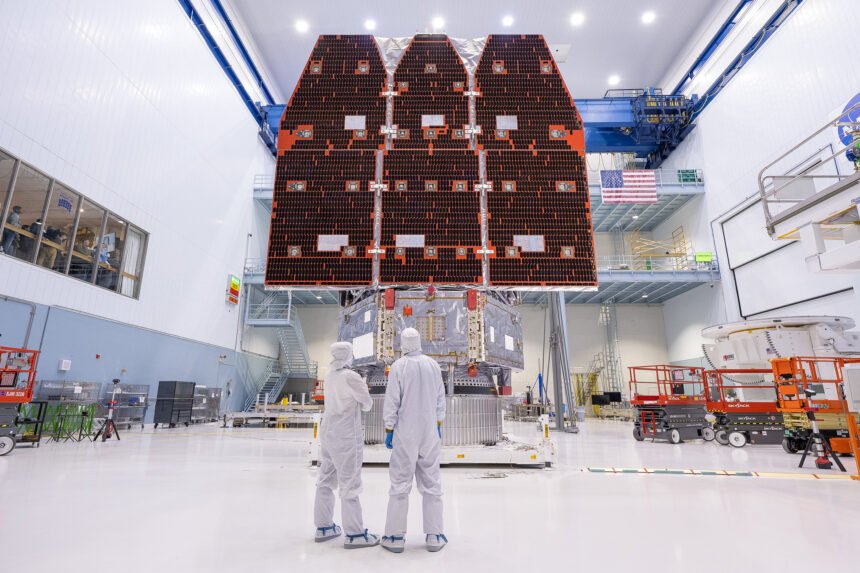
The archive photograph accompanying this article shows the actual telescope in a clean room at Goddard Space Flight Center on 25 November 2025. The December release concerns what that instrument has now seen in space. For a separate example of how an engineering milestone fits into a longer mission, read The Popular Story’s report on the Artemis engine test at NASA Stennis.
Save the advisory if you want the original announcement, and bookmark the mission page for later updates after the unveiling.