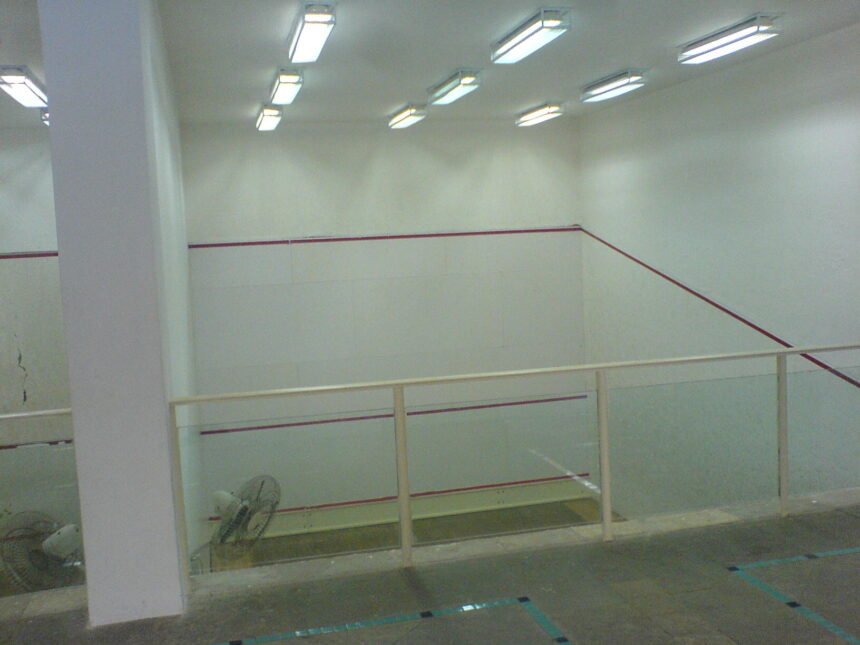
In squash, both players face the same front wall and share the same small court. The ball can come back at an angle off a side wall, and the next player must reach it before it bounces twice. The shared space explains why a rally can stop even while the ball is still playable. It also makes a match easier to follow once you know where each player is trying to go after a shot.
Squash makes its Olympic debut at Los Angeles 2028. The LA28 sport page lists men’s and women’s singles and describes a best-of-five match format. While watching a practice match, a club competition or a professional broadcast, the best place to start is the score. Then watch the way the players trade space around the middle of the court.
Keep two scores in mind
According to the World Squash singles rules, every completed rally produces a point for its winner. The winner also serves the next rally. A game normally ends when one player reaches 11 points, provided that player leads by at least two. At 10–10, play continues until the margin reaches two. You can therefore see a game finish 12–10, 14–12 or higher.
A best-of-five match ends when someone wins three games. Take a player who wins the first game 11–3 but loses the second 10–12. The match is one game apiece. The large margin in the opening game does not carry into the next game, so the two numbers to follow are games won and the current game’s points. On a broadcast, a row of earlier scores usually gives the path to the current game. You can tell whether the players have traded close games or whether one of them has come back after a clear loss.
Watch where the hitter goes afterwards
The front wall has an out line above the playing area and a low boundary called the tin. A return must reach the front wall within the rules and before the second bounce. Long drives near a side wall can send an opponent to a back corner. A short shot can make that opponent run the other way. The shot’s value often depends on where both players are when it is struck.
The T is the junction near the middle where the court’s floor lines meet. Players often try to recover towards it after a shot because it gives them options to move forward or back. Watch the hitter’s first steps after the ball leaves the racket. If an opponent repeatedly keeps that player deep in a corner, the follow-up movement can explain the rally even when the ball is hard to see.
What happens when a player stops
Interference decisions account for the fact that the players share the court. A player can stop and appeal to the referee if there is interference. Depending on the circumstances, the ruling can be a let, which replays the rally, a stroke, which awards the rally to a player, or no let. Details matter, including the incoming player’s access to the ball, the outgoing player’s effort to clear and the possibility of making a legal return.
In a replay, start by looking past the ball. Where was the player trying to move? Was there space to swing? Did the other player take a route that left room? The official decision may rely on more than the angle a television camera provides. Over a few matches, the pauses become easier to understand and the score becomes easier to read. For an introduction to India’s squash talent, read The Popular Story’s profile of Anahat Singh.
Featured image: Mehulsg. Image source. Reuse terms.