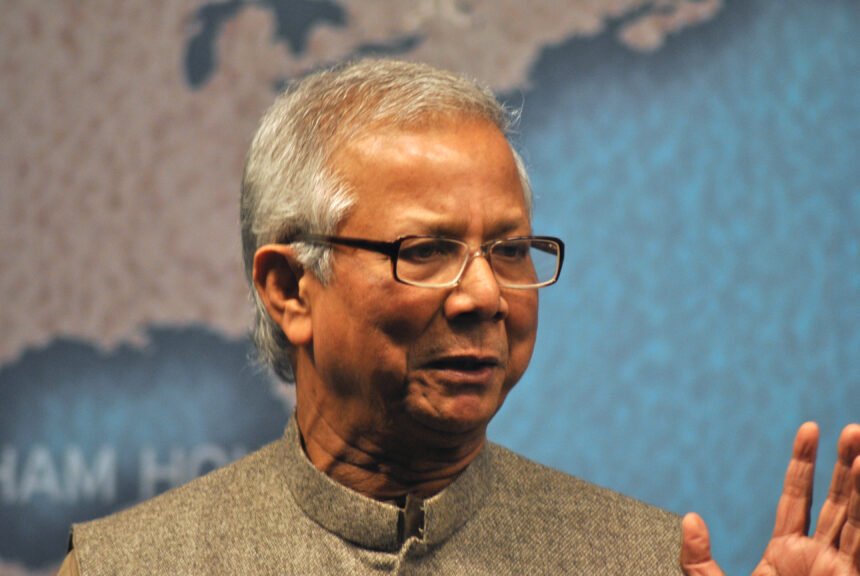
In 1976, Muhammad Yunus began a lending pilot in Jobra, a village near the University of Chittagong in Bangladesh. He was an economics professor interested in the choices available to people with little money and no access to conventional bank credit. The bank’s history describes Jobra as an action research project. The question was whether a financial service designed around what rural borrowers actually needed could reach people typically excluded from the banking system.
The bank traces the idea to encounters in the years after Bangladesh’s 1974 famine. People producing goods for sale could need very small amounts of money for materials. Without cash to buy those materials, they might rely on someone who could dictate the terms on which the finished goods were sold. From a distance, a sum that small may look insignificant. To a household running a trade day by day, it can determine whether the trade starts at all and how much of the sale stays with the producer.
What a pilot could teach the founder
Consider someone making household goods who gets paid only after selling the finished product. Money has to go out for supplies before any comes back. A lender deciding how to reach that person has to understand when the sales happen, who buys the goods and what a slow week does to the household. Questions that look simple in a spreadsheet can have very different answers from one trader to the next.
A pilot makes some of those differences visible before an institution sets rules for a much broader population. It can also show practical barriers that have little to do with the initial amount. Where does somebody have to go to speak to the lender? How much working time does that visit take? Can people understand the terms from the information they receive? A programme still has to decide how to manage its own risks, but its designers learn more if they can watch people try to use it.
From research project to independent bank
The initial experiment took place with support involving a commercial bank and the university, according to Grameen’s account. Its institutional history says the project became an independent bank through a government ordinance on 2 October 1983. That change came after several years of work. It transformed a local experiment into an organisation that had to train staff, maintain records and make consistent decisions across locations. A founder’s ability to speak with people in one village could only take the project so far.
In 2006 the Nobel committee awarded the Peace Prize jointly to Yunus and Grameen Bank for their efforts to create development from below. The award recognised the work as the committee understood it at the time. The prize also makes sense as a shared honour when you consider how many people are needed to build a bank. Local staff and borrowers provide information that determines whether a set of written procedures works outside the office.
The creation of a bank and the effect of a particular loan are separate questions. Borrowing puts an obligation on the person who receives the money, and the outcome can vary with the terms and with the trading conditions a borrower faces. The Jobra episode is useful as a history of institutional design because it shows where the original questions came from. Researchers started close enough to the people using the service to observe which practical problems they faced, then spent years building an organisation around the experiment.
For readers interested in how a small project grows, the important dates are 1976 and 1983. One marks a pilot with room to learn. The other marks an institution with responsibilities that had to be carried out beyond the original village. The years between are the part that can be missed when the story is told through the 2006 prize alone. For other profiles about building institutions from practical problems, visit The Popular Story’s Success Stories desk.
Featured image: Chatham House. Image source. Reuse terms.