A huge crowd filled Letná Plain in Prague on Sunday, 15 November, to protest a government plan that would change how the Czech Republic pays for its public television and radio. Organisers from the civic group Million Moments for Democracy estimated the turnout at about 350,000 people. That figure has not been independently confirmed, but reports described the crowd as running into hundreds of thousands.
Organisers said it may be the largest demonstration in the country since the Velvet Revolution of 1989, which ended communist rule in what was then Czechoslovakia.
What the government wants to change
Czech Television (ČT) and Czech Radio (ČRo) are mostly funded today by licence fees paid by households and businesses. The television fee is 205 koruna a month.
The coalition led by Prime Minister Andrej Babiš wants to scrap these fees and fund both broadcasters directly from the state budget. According to reports on the plan, this would also cut their budgets by roughly 15%.
The bill cleared its first stage in the lower house of parliament in a vote held at 4:34 am on 24 October, after an overnight session. The timing itself became one of the protesters’ complaints.
Why people took to the streets
Critics argue that a broadcaster paid out of the yearly state budget becomes easier to pressure. A government unhappy with coverage could, in theory, squeeze funding during budget talks. The licence fee, by contrast, gives the broadcasters an income stream that does not pass through ministers’ hands each year.
The protesters put forward three demands:
- Withdraw the media funding bill.
- Apologise for pushing it through in an overnight sitting.
- Hold a proper public discussion on the future of public service media.
Lukáš Matoška, a presenter at Czech Radio, warned that a future government could push the broadcasters toward softer programming. Staff at both ČT and ČRo had already held a strike before Sunday’s rally, and several weeks of smaller protests had taken place in cities across the country.
Several international media bodies have also criticised the plan, including the European Broadcasting Union, the European Federation of Journalists, Reporters Without Borders and the International Press Institute.
Some speakers and marchers pointed to neighbouring countries. They named Slovakia, Hungary, Poland and Serbia as places where, in their view, public media independence has been weakened in recent years.
What the government says
Babiš has rejected the criticism. He said the protesters were stirring up the public with unfounded claims and published an opinion piece listing what he called seven false claims about the fee. He described critics’ reactions as hysterical and said, in his words, “Under no circumstances will we interfere in editorial work.”
The government’s main argument is about cost. Ministers say ending the fee would remove a payment that every household has to make, whatever it watches or listens to.
Why Letná matters
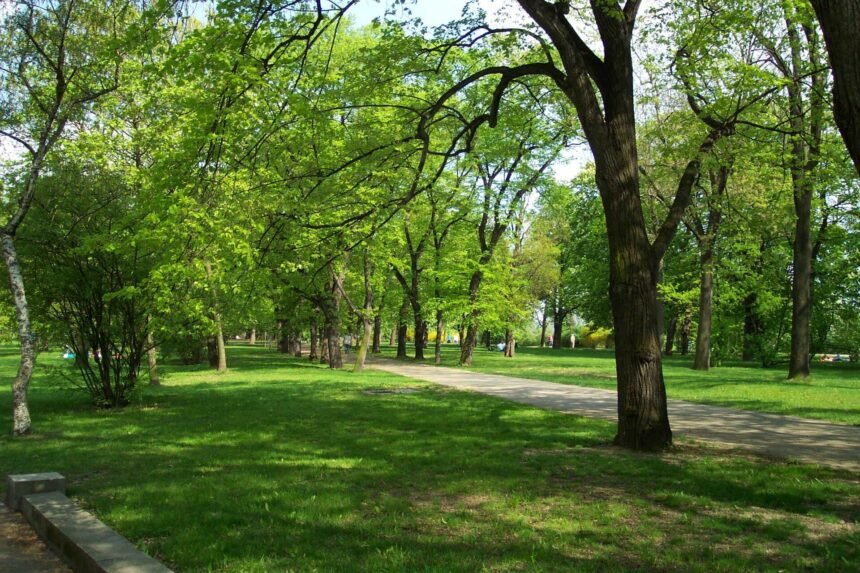
The choice of venue was not random. Letná, a wide plain on a hill above the Vltava river, hosted some of the biggest crowds of the 1989 revolution. Million Moments for Democracy also held a large rally there in 2019.
The timing carries weight too. 17 November is a national holiday in the Czech Republic, marking the student protests that started the Velvet Revolution. Sunday’s rally came two days before that anniversary.
What happens next
The bill still has to pass further readings in the lower house before it moves to the Senate and the president. Opponents hope the size of the crowd will push the coalition to slow down or change the plan. The government has so far given no sign that it will drop it.
The debate is likely to stay in the headlines through the 17 November anniversary and the next parliamentary sittings.
Reporting based on The National via Yahoo News and UNN (citing the Associated Press).
Featured image: Aktron, via Wikimedia Commons (CC BY-SA 3.0)