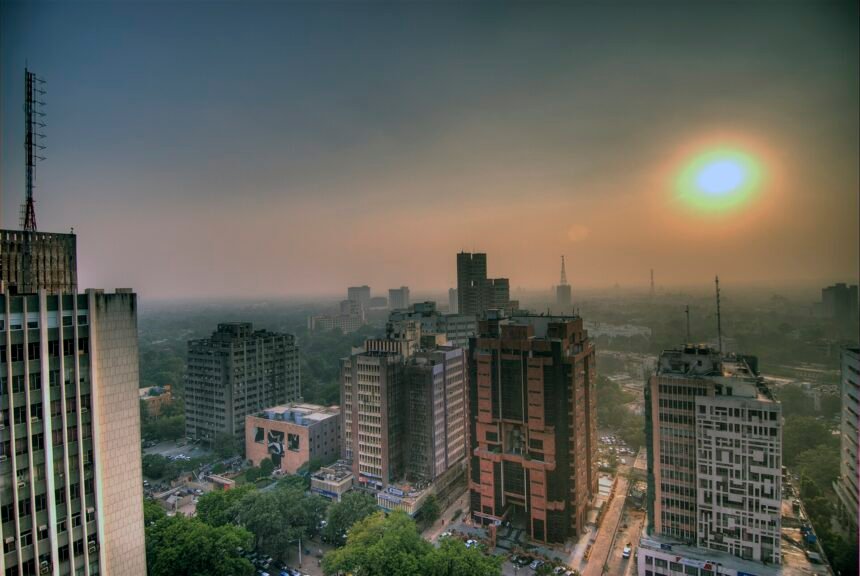
Every November, the same thing happens across Delhi-NCR and much of north India. The sky turns a flat grey, your throat feels scratchy by evening, and the AQI app becomes the first thing you check in the morning. This year has been no different. Delhi’s air has stayed in the “very poor” range for most of November, and some monitoring stations logged PM2.5 above 3,000 µg/m³ on Diwali night. The national 24-hour standard is 60.
You cannot fix the city’s air from your living room. But most of us spend the bulk of the day indoors, and that is the air you actually have some control over. Here is what helps, and what does not.
1. Close windows at the wrong hours, open them at the right ones
Pollution tends to peak late at night and early in the morning, when the air is cold and still and pollutants sit close to the ground. That is the worst time to air out the house. Keep windows shut overnight and in the early morning.
Homes still need some fresh air, though, or moisture, cooking fumes and carbon dioxide build up. Check your local AQI and open windows for a short while in the afternoon, when readings are usually lowest. Fifteen to twenty minutes is enough.
2. Use a purifier properly, or not at all
An air purifier with a true HEPA filter does reduce fine particles indoors. But it only works well when:
- It is sized for the room. Look at the CADR (clean air delivery rate) on the box and match it to your room size, not the whole flat.
- The doors and windows of that room are closed.
- It runs continuously, not for an hour before bed.
- The filter is replaced on time. A clogged filter is close to useless.
If you can afford only one, put it in the bedroom. You spend seven or eight hours there with no other way to filter the air.
3. Stop adding smoke indoors
This one is free. During smog season, cut down on the things that make indoor air worse:
- Agarbatti, dhoop and mosquito coils produce fine particles of their own.
- Deep frying and tadka release a surprising amount of smoke. Use the exhaust fan or chimney every time.
- Smoking indoors is the worst offender of all.
4. Clean wet, not dry
Sweeping with a broom throws settled dust back into the air. Wet mopping and wiping surfaces with a damp cloth trap it instead. If you vacuum, a machine with a HEPA filter is better than one that blows fine dust out of the back.
5. A word on plants
Indoor plants are lovely to have, but they will not clean polluted air in any meaningful way. You would need an unrealistic number of them in a single room to match even a small purifier. Keep them for how they make your home feel, not as a pollution fix.
6. Masks outside, and the right kind
Cloth masks and loose surgical masks do little against fine particles. If you need to be outside on a bad day, an N95 or N99 mask that fits snugly around the nose and chin is the useful option. A mask with gaps at the sides is not doing its job.
7. Move exercise indoors for now
A morning run feels healthy, but heavy breathing in heavy smog means taking in much more polluted air. On “very poor” or “severe” days, shift workouts indoors: yoga, skipping, a home workout video. The park will still be there when the air clears.
8. Watch the people most at risk
Children, older people, pregnant women and anyone with asthma, heart disease or other breathing problems feel smog first and worst. Official advice is to limit their time outdoors during bad spells. If someone at home has a persistent cough, breathlessness, chest tightness or a wheeze, do not wait it out. See a doctor.
The bottom line
None of this replaces cleaner air outside. But closed windows at night, one well-used purifier, less smoke indoors and wet cleaning can make a real difference to how your home feels through the worst weeks of the year.
This article offers general guidance. For medical advice, consult a doctor. Air quality figures from Business Today.
Featured image: Image: wili hybrid, via Wikimedia Commons (CC BY 2.0).