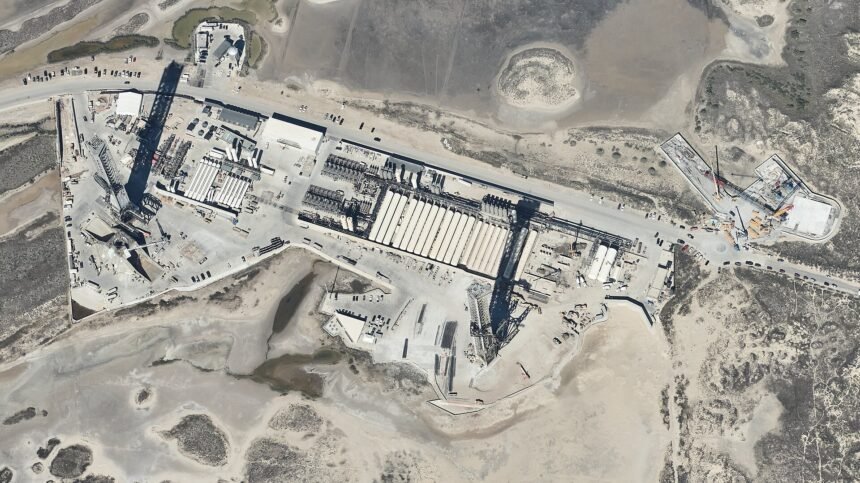
SpaceX has caught the upper stage of its Starship rocket with the giant mechanical arms of its launch tower for the first time. The Ship returned to Starbase in south Texas on Saturday, 14 November, after about 22.5 hours in orbit on the rocket’s 15th test flight.
No orbital upper stage had ever been flown back to its launch site and caught before. “We caught a Starship, and now everything changes,” SpaceX spokesperson Dan Huot said, as quoted by Space.com.
How Flight 15 went
Starship lifted off from Pad 2 at Starbase on the evening of Friday, 13 November. The vehicle, Ship 42, flew on top of Super Heavy Booster 22.
- In orbit: The Ship reached orbit and, according to Teslarati, released 26 Starlink V3 satellites, three of them carrying cameras to photograph its heat shield.
- Time in space: About 22.5 hours and roughly 14 orbits of Earth.
- Return: The Ship came back through the atmosphere on Saturday and was caught by the tower’s “chopstick” arms.
The booster did not make it back
The day was not a clean sweep. Booster 22 aborted its return after a low-fuel warning and came down in the Gulf of Mexico. Elon Musk blamed engines that ran slightly below expected performance, which left too little propellant for the trip back. SpaceX is investigating. Super Heavy boosters have been caught by the tower on earlier flights, so the company has now caught both stages, though not yet on the same mission.
Why catching the Ship matters
Starship is designed to be fully reusable. Catching both stages on the tower means they can be inspected, refurbished and flown again quickly, without fishing them out of the sea. SpaceX says this will become standard on operational flights.
Reuse is central to SpaceX’s plans to launch much larger Starlink satellites and to NASA’s Moon programme. NASA has picked Starship as the lander that will carry astronauts to the lunar surface under Artemis. That mission needs Starships to refuel in Earth orbit using tanker flights, and SpaceX has yet to show propellant transfer between two ships. Space.com reports the first refuelling test is expected relatively soon.
What comes next
SpaceX still has to show it can fly the same Ship or booster again quickly. Musk has said he expects a weekly launch rate in the first half of 2027, a target that, like many of his timelines, should be treated as an aim rather than a firm plan.
Reporting based on Space.com and Teslarati.
Featured image: NOAA / NODD, via Wikimedia Commons (Public domain)