The Popular Story
  • About Us
  • Articles
  • Success Stories
  • Contact Us
  • About UsArticlesSuccess StoriesContact Us
HomeTop NewsEntertainmentSportsLifestyleAstrologyWorld
Magazine
All IssuesIconic Personalities of the Year 2026July 2026 | The Business Visionaries EditionThe Popular Story 40 Under 40Top 50 Iconic Personalities of 2026
Lists
40 Under 40Top 50 Iconic PersonalitiesIconic Personalities of the Year
Connect+
InstagramFacebookXYouTubeLinkedIn
All Categories
HomeTop NewsEntertainmentSportsLifestyleAstrologyWorldMagazine40 Under 40Top 50 Iconic PersonalitiesIconic Personalities of the YearAbout Us
Font ResizerAa
The Popular StoryThe Popular Story
Search
Follow US
Copyright © 2025-2026 MP Media. All rights reserved.
The Popular Story > Success Stories > How Muhammad Yunus’s Village Lending Pilot Became Grameen Bank
Success StoriesTop News

How Muhammad Yunus’s Village Lending Pilot Became Grameen Bank

By Mohit Patel Last updated: November 20, 2026 5 Min Read
Share
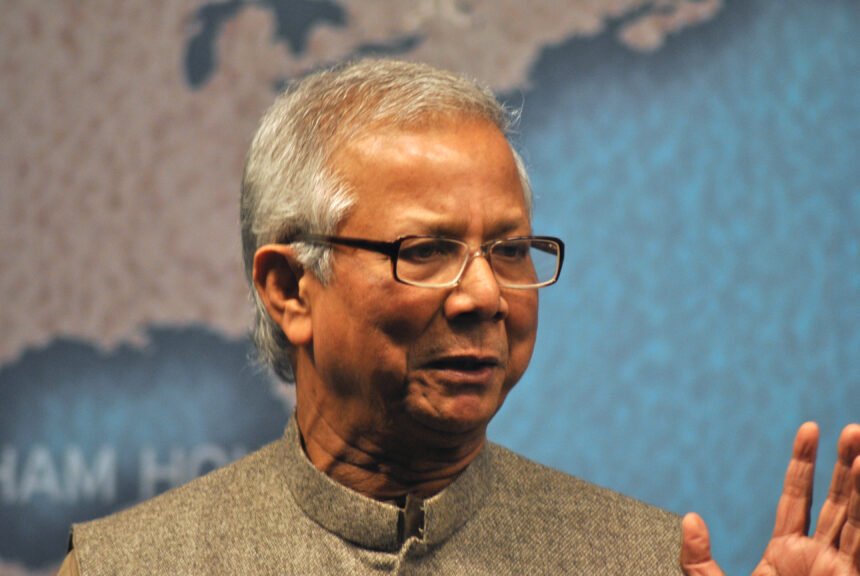
Muhammad Yunus speaks at Chatham House.
Muhammad Yunus speaks about social business at Chatham House in London on 24 November 2011. Image credit: Chatham House.

In 1976, Muhammad Yunus began a lending pilot in Jobra, a village near the University of Chittagong in Bangladesh. He was an economics professor interested in the choices available to people with little money and no access to conventional bank credit. The bank’s history describes Jobra as an action research project. The question was whether a financial service designed around what rural borrowers actually needed could reach people typically excluded from the banking system.

Contents
What a pilot could teach the founderFrom research project to independent bank

The bank traces the idea to encounters in the years after Bangladesh’s 1974 famine. People producing goods for sale could need very small amounts of money for materials. Without cash to buy those materials, they might rely on someone who could dictate the terms on which the finished goods were sold. From a distance, a sum that small may look insignificant. To a household running a trade day by day, it can determine whether the trade starts at all and how much of the sale stays with the producer.

What a pilot could teach the founder

Consider someone making household goods who gets paid only after selling the finished product. Money has to go out for supplies before any comes back. A lender deciding how to reach that person has to understand when the sales happen, who buys the goods and what a slow week does to the household. Questions that look simple in a spreadsheet can have very different answers from one trader to the next.

A pilot makes some of those differences visible before an institution sets rules for a much broader population. It can also show practical barriers that have little to do with the initial amount. Where does somebody have to go to speak to the lender? How much working time does that visit take? Can people understand the terms from the information they receive? A programme still has to decide how to manage its own risks, but its designers learn more if they can watch people try to use it.

From research project to independent bank

The initial experiment took place with support involving a commercial bank and the university, according to Grameen’s account. Its institutional history says the project became an independent bank through a government ordinance on 2 October 1983. That change came after several years of work. It transformed a local experiment into an organisation that had to train staff, maintain records and make consistent decisions across locations. A founder’s ability to speak with people in one village could only take the project so far.

In 2006 the Nobel committee awarded the Peace Prize jointly to Yunus and Grameen Bank for their efforts to create development from below. The award recognised the work as the committee understood it at the time. The prize also makes sense as a shared honour when you consider how many people are needed to build a bank. Local staff and borrowers provide information that determines whether a set of written procedures works outside the office.

The creation of a bank and the effect of a particular loan are separate questions. Borrowing puts an obligation on the person who receives the money, and the outcome can vary with the terms and with the trading conditions a borrower faces. The Jobra episode is useful as a history of institutional design because it shows where the original questions came from. Researchers started close enough to the people using the service to observe which practical problems they faced, then spent years building an organisation around the experiment.

For readers interested in how a small project grows, the important dates are 1976 and 1983. One marks a pilot with room to learn. The other marks an institution with responsibilities that had to be carried out beyond the original village. The years between are the part that can be missed when the story is told through the 2006 prize alone. For other profiles about building institutions from practical problems, visit The Popular Story’s Success Stories desk.

Featured image: Chatham House. Image source. Reuse terms.

Subscribe to Our Newsletter

Subscribe to our newsletter to get our newest articles instantly!

[mc4wp_form]

Sign Up For Daily Newsletter

Be keep up! Get the latest breaking news delivered straight to your inbox.
[mc4wp_form]
By signing up, you agree to our Terms of Use and acknowledge the data practices in our Privacy Policy. You may unsubscribe at any time.
Share This Article
Facebook Twitter Email Copy Link Print
By Mohit Patel
Follow:
Mohit Patel is an Indian entrepreneur, digital marketing professional, and Founder & CEO of MP Media Promotion. With expertise in public relations, media outreach and brand building, he helps businesses and personalities strengthen their visibility. He also founded The Popular Story, a magazine platform highlighting inspiring individuals and emerging talent across India.
Leave a comment Leave a comment

Leave a Reply Cancel reply

Your email address will not be published. Required fields are marked *

SUBSCRIBE NOW

Subscribe to our newsletter to get our newest articles instantly!

[mc4wp_form]

HOT NEWS

A movie camera on a tripod

IFFI’s Films About Films Section Turns the Camera on Cinema Itself

The International Film Festival of India has added a section devoted to films about the…

November 19, 2026
Technicians in white protective suits stand around the Roman Space Telescope in a clean room.

NASA Sets 7 December for the Roman Space Telescope’s First Images

NASA plans to unveil the first images from the Nancy Grace Roman Space Telescope on…

November 20, 2026
A bright exhaust plume pours from an engine mounted on the Fred Haise Test Stand.

NASA Fires an Artemis Development Engine for 200 Seconds in Mississippi

An RS-25 engine burned for three minutes and 20 seconds at NASA’s Stennis Space Center…

November 20, 2026

YOU MAY ALSO LIKE

How to Follow a Squash Match Before the Sport’s LA28 Olympic Debut

In squash, both players face the same front wall and share the same small court. The ball can come back…

SportsTop News
November 20, 2026

Gukesh vs Sindarov: When to Watch the 2026 World Chess Championship in India

India’s D. Gukesh starts his first defence of the undisputed world chess title on 24 November 2026, when he plays…

SportsTop News
November 20, 2026

Temple Grandin Made Animal Handling a Design Problem People Could Measure

When an animal hesitates at a gate, a person watching may see stubbornness. Temple Grandin looked at the place where…

Success StoriesTop News
November 20, 2026

How José Andrés Turned a Cook’s Response to Disaster Into World Central Kitchen

After the 2010 earthquake in Haiti, Spanish-born chef José Andrés went to see what cooks could contribute after a disaster.…

Success StoriesTop News
November 20, 2026
Copyright © 2025-2026 MP Media. All rights reserved.

About Us

The Popular Story is a digital magazine and news publication bringing you stories from entertainment, sports, lifestyle, astrology and the world, with a focus on clear, original and reliable reporting.

Quick Links

  • About The Popular Story
  • Privacy Policy
  • Terms and Conditions
  • Disclaimer
  • Editorial Policy
  • Corrections Policy
  • Our Team

Follow us on Social Media

Explore

  • Contact Us
  • Entertainment
  • Sports
  • Lifestyle

Latest Magazine

View Magazine
© 2026 The Popular Story. All rights reserved.Privacy
Welcome Back!

Sign in to your account

Lost your password?