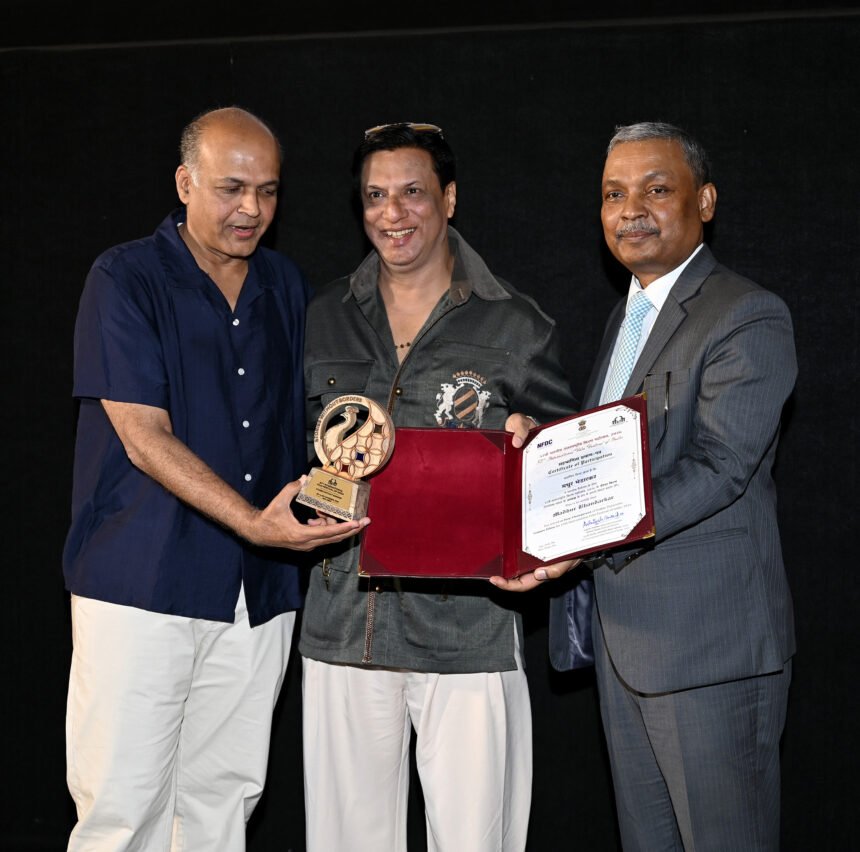
Indian Panorama opened at the 57th International Film Festival of India in Panaji, Goa, on 21 November 2026. At the inauguration, the festival honoured the juries responsible for selecting its feature and non-feature films. The ceremony brought a usually quiet part of a festival into public view. Audiences see the finished schedule and the opening titles. Before that schedule exists, juries have to watch a much larger set of films and decide which ones to put before the public.
The Press Information Bureau’s account of the inauguration identifies Information and Broadcasting Secretary Chanchal Kumar, National Film Development Corporation Chairperson G. Krishnakumar and festival director Ashutosh Gowariker as the officials who honoured the jury members. The official photo album records that ceremony in Goa. It is distinct from the festival’s overall opening and from the separate jury press conferences held during the programme.
What opened on 21 November
Aditya Dhar’s Hindi film Dhurandhar was selected as the opening feature. Leena Yadav’s Ladakhi film Becoming was selected to open the non-feature programme. Both appear on the 21 November schedule in the festival’s IFFILOID bulletin. The choice of two opening titles reflects the programme’s structure. Each title introduces its own part of Indian Panorama, so a listing that names only the opening feature gives readers only part of the day’s schedule.
The selection announcement lists 25 features and 20 non-features. The feature total includes five titles in the Mainstream Cinema section. The ministry said the features were drawn from 404 entries and the non-features from 358 entries. These figures describe the submissions and selected films. For a reader deciding what to watch, the useful detail is the section attached to each title, since that helps explain where the film sits in the programme.
What the feature jury discussed
At a separate press conference, members of the feature jury described watching films from different parts of India and responding to ideas and emotions they recognised across regional settings. The briefing also addressed the five mainstream titles. PIB reported that jury chair Madhur Bhandarkar described that selection as a collective decision.
Those remarks offer a window into what the jurors noticed while watching. They leave room for viewers to have their own reactions to the finished programme. A film that is familiar in its home market may be new to someone attending from another region. A short film can also make an impression in a very different amount of screen time from a full-length feature. The schedule gives audiences a chance to experience these differences for themselves.
Reading the programme after opening day
Begin with the title, director and language. A film may appear under a translated name in some listings, so the director’s name can help confirm you have found the correct entry. Then use the current programme to check the hall, timetable and admission instructions. The date in an opening announcement describes that event. It gives little information about the availability of later screenings or any changes to their venues.
For readers planning the rest of their visit, The Popular Story’s IFFI Goa guide covers the festival dates and venue information. The jury ceremony gives audiences a starting point for exploring Indian Panorama. The individual listings tell them where and when they can see the films.
There is also a simple way to use the programme after the festival. Keep the original titles of the films that caught your eye, alongside the director and language. A festival listing can disappear from a ticketing page long before the film finds another screening. Those details make it easier to look for a later showing or follow the filmmaker’s next project.
Photo: Press Information Bureau.